
Facility security isn’t just about strong locks and solid walls. It’s a detailed science, shaped by decades of real-world experience and evolving standards. Detention equipment contractors bring more to the table than hardware—they bring reliability, foresight, and systems that work without compromise.
Reinforced Hollow‑Metal Doors Strengthening Entry Security
Detention center doors do more than separate spaces—they anchor safety throughout a facility. Reinforced hollow-metal doors are designed to take high impact, resist tampering, and endure the wear that comes with a high-stress environment. For detention equipment contractors, this isn’t just about strength; it’s about predictability. They need doors that hold under pressure, resist prying, and stay functional through thousands of daily cycles.
The metal itself is typically 12-gauge or heavier, paired with welded-in reinforcements, internal stiffeners, and secure anchoring to pre-cast or modular jail structures. A well-installed hollow-metal door doesn’t just block access—it reduces incidents. For security detention equipment contractors, this is a must-have on every project. It sets the tone for the rest of the facility and defines how the rest of the equipment integrates.
Dual‑Action Security Locks Meeting ASTM Standards
Locks are more than hardware—they’re behavioral controls. Dual-action security locks offer two-stage engagement, designed to reduce the chance of user error and make tampering significantly more difficult. These locks meet ASTM F1577 and F1450 standards, which are benchmarks detention equipment contractors rely on for strength, cycle testing, and forced-entry resistance.
A security detention equipment contractor will rarely approve a lock system that hasn’t been tested under real-world stress scenarios. These locks are designed to remain operational in extreme temperatures, after high-force attacks, and through constant daily use. Their purpose isn’t just to secure; it’s to remove uncertainty. Whether in a county jail or modular facility expansion, this type of locking mechanism plays a critical role in maintaining control.
Modular Cell Units Ensuring Controlled Access Perimeter
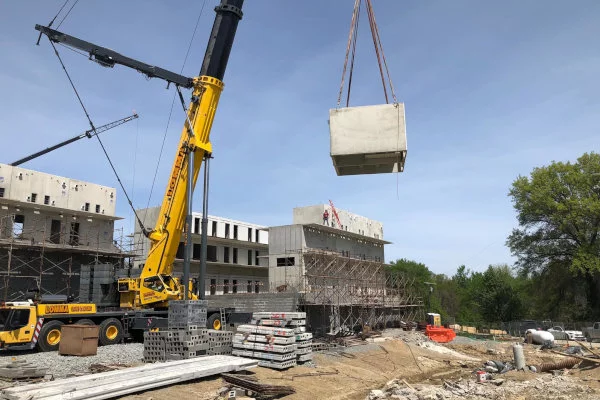
Modular jails and prefabricated cell units are changing how facilities are built—and secured. These units are fabricated off-site under strict quality controls and then assembled quickly on location. For detention equipment contractors, this means fewer construction delays, consistent finishes, and the ability to meet project deadlines without compromising on quality or safety.
The key safety benefit of modular cell units is predictability. Welded seams, integrated utility chases, and pre-fitted detention center doors all align perfectly because they’re built in factory-controlled environments. Contractors can design controlled-access perimeters with precise placement of surveillance, security glazing, and tamper-proof hardware. Once in place, these units act as independent security zones, ideal for both new construction and facility upgrades.
Electro‑Mechanical Sliding Devices Preventing Unauthorized Movement
Controlling inmate movement is central to facility operations. Electro-mechanical sliding devices give detention officers remote control over door operation, allowing quick lockdowns or controlled access from a central station. These aren’t just motors on a track—they’re built with fail-safes, position sensors, and override capabilities for emergency use.
Unlike traditional mechanical sliders, these systems offer smoother transitions and can be programmed to operate based on facility routines. A detention equipment contractor integrates them with electronic panels, surveillance, and fire systems for maximum functionality. Whether used in corridors, dayrooms, or isolation wings, they prevent unauthorized movement without the need for constant hands-on supervision.
Integrated Security Glazing Minimizing Tampering Risks
Security glazing isn’t just about clear visibility—it’s a physical barrier that’s engineered to resist breakage, shattering, and tool attacks. Detention equipment contractors select laminated polycarbonate or glass-clad polycarbonate layers sealed within stainless steel frames for this reason. It might look like a window, but it performs like a wall.
Integrated glazing is often placed in doors, visitation areas, and observation zones. For high-risk facilities or mental health units, anti-ligature designs and spall-resistant coatings add another layer of protection. This glazing reduces blind spots, increases officer visibility, and ensures high-impact tamper resistance—without making the space feel overly enclosed.
Fire‑Rated Frames and Ceilings Ensuring Safety Compliance
Fire safety gets just as much attention as physical security in modern detention environments. Fire-rated frames and ceilings are engineered to contain heat and smoke, allowing safe evacuation and protecting vital control systems. These components are tested for hours of fire exposure, and detention equipment contractors ensure they’re installed according to UL standards.
In facilities where movement is restricted and evacuation takes time, fire-rated systems are non-negotiable. The goal is to isolate the threat, not just slow it. In modular jail units, these elements can be pre-installed, streamlining inspections and avoiding field errors. It’s not just about checking boxes—it’s about ensuring every occupant, staff and inmate alike, has protection during unexpected events.
Certified Maintenance Protocols Upholding Operational Integrity
Even the most advanced detention equipment can fail without proper maintenance. That’s why detention equipment contractors don’t stop at installation—they implement certified maintenance protocols tailored to the specific products and systems in place. These protocols cover everything from door hinge tension checks to electrical motor diagnostics and lock re-calibrations.
Scheduled maintenance isn’t just about performance—it’s about reducing liability. Contractors often train facility staff or provide ongoing service plans to ensure long-term operational integrity. Especially in environments where downtime can create risk, consistent inspection and repair cycles help detention facilities avoid disruptions and ensure the security measures installed continue to work as designed.