
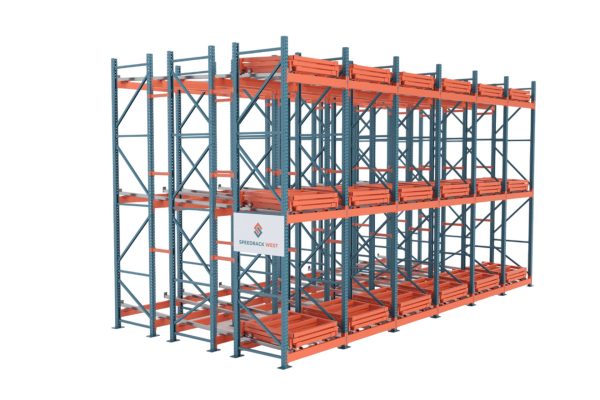
Googled “racking” or “shelving” and now drowning in tabs about warehouse racks and racking systems? Yeah, it gets confusing fast.
Here’s the quick fix: racking handles the heavy stuff—pallets, bulk stock, warehouse loads. Shelving is for lighter, hand-picked items.
Which one fits your setup? Let’s break it down in a quick, no-fluff review.
What Is Racking?
Racking—you’ve definitely seen it before. Think of the tall metal structures in places like Costco, Home Depot, Walmart, Lowe’s, or even Sam’s Club. They’re heavy-duty storage systems built to hold tons of goods (literally).
Racking refers to an industrial storage system designed for large, bulky, or palletized items. The big idea? Use vertical space to store massive amounts of product in one area—saving both room and time.
Most warehouse racking systems need equipment like forklifts or pallet jacks to load and retrieve items.
So next time you hear “racking,” think: strong, tall, space-smart storage for serious loads.
What Is Shelving?
You don’t have to look far to get the idea. Just think of a bookcase or a wardrobe with shelves—super convenient, right? That’s the concept: divide the space and store smaller items efficiently.
Shelving units are usually shorter, lighter, and much easier to assemble than racking systems. No forklifts or special equipment required—just reach in and grab what you need.
You’ll see it in retail stockrooms, libraries, garages, or office storage rooms—basically, anywhere that needs simple, accessible storage.
So, if your storage is more hands-on and doesn’t involve heavy lifting, shelving might be all you need.
What’s the difference between shelving and racking?
Racking vs Shelving: The Key Differences
Imagine you’re opening a small store. Your first delivery includes pallets of soil or fertilizer, and pots of flowers ready to be displayed. Where do you put everything?
Simple: the heavy pallets go on industrial warehouse racks—built for weight and bulk. The flower pots? They’re light and need to be visible, so you place them on shelving units.
Here’s a quick side-by-side comparison to make it even clearer:
Feature
Racking
Shelving
Weight Capacity
Heavy loads (pallets, bulk)
Light to medium loads
Access Method
Forklift, pallet jack
Manual (by hand)
Height/Scalability
Very tall, expandable
Typically lower, less modular
Cost (Initial Setup)
Higher (but scalable)
Lower
In short, racking is your go-to for industrial or warehouse-scale storage, while shelving is ideal for hands-on setups to store and display products.
Types of Racking Systems by Use
What are the different types of storage systems used in the warehouse? Once you decide that racking is the way to go, the next step is choosing the right type of warehouse racking.
Here are a few of the most common:
1. Pallet Racking. This is the most widely used industrial racking system, perfect for storing palletized goods. It’s strong, scalable, and comes in several variations (like selective, double-deep, and drive-in).
2. Cantilever Racking. Great for storing long, bulky items like timber, pipes, or metal bars. This system has arms that extend out, rather than shelves.
3. Push-Back Racking. Designed for high-density storage, push-back systems allow pallets to be stored on wheeled carts, pushed back as new ones are loaded in front.
4. Drive-In / Drive-Through Racking. These systems let forklifts drive directly into the rack structure, making them ideal for storing large quantities of similar items.
5. Mezzanine Racking. This maximizes vertical space by creating an extra floor level. A smart pick if you’re low on floor space but have plenty of height.
6. Vertical Storage Racking. Designed to store tall, narrow items like pipes, rods, lumber, or molding. The system keeps products upright to save floor space and improve accessibility.
7. Stacking Racks. These are portable, modular racks that can be stacked when in use and collapsed or nested when not. They’re ideal for temporary or flexible storage needs, such as seasonal inventory or for storing pipes and tubes.
Still Not Sure? Here’s a Quick Guideline
- Opening a retail store with a small back room? Go with shelving.
- Stocking a large inventory in a warehouse? You’ll need racking systems.
- Handling long items like pipes or lumber? Check out cantilever racks.
- Want to maximize space and have forklift access? Consider pallet racking or push-back racking.
Final Thoughts
Now you’ve got the main idea — and that already puts you ahead of the game. Now you know where to go next: pallet racking or shelving, and which one actually fits your needs.
A quick heads-up: when you start looking for commercial racking systems, keep an eye on a few important things:
- Load capacity — how much weight the system can safely hold
- Build and compliance — is the equipment up to safety standards?
- Installation — who’s setting it up, and do they understand OSHA regulations and consider the seismic zone of your state?
But honestly, the biggest step is already behind you — you’re no longer just searching for “some storage thing.” You now know what you need.
That’s a win. You’re doing great.