
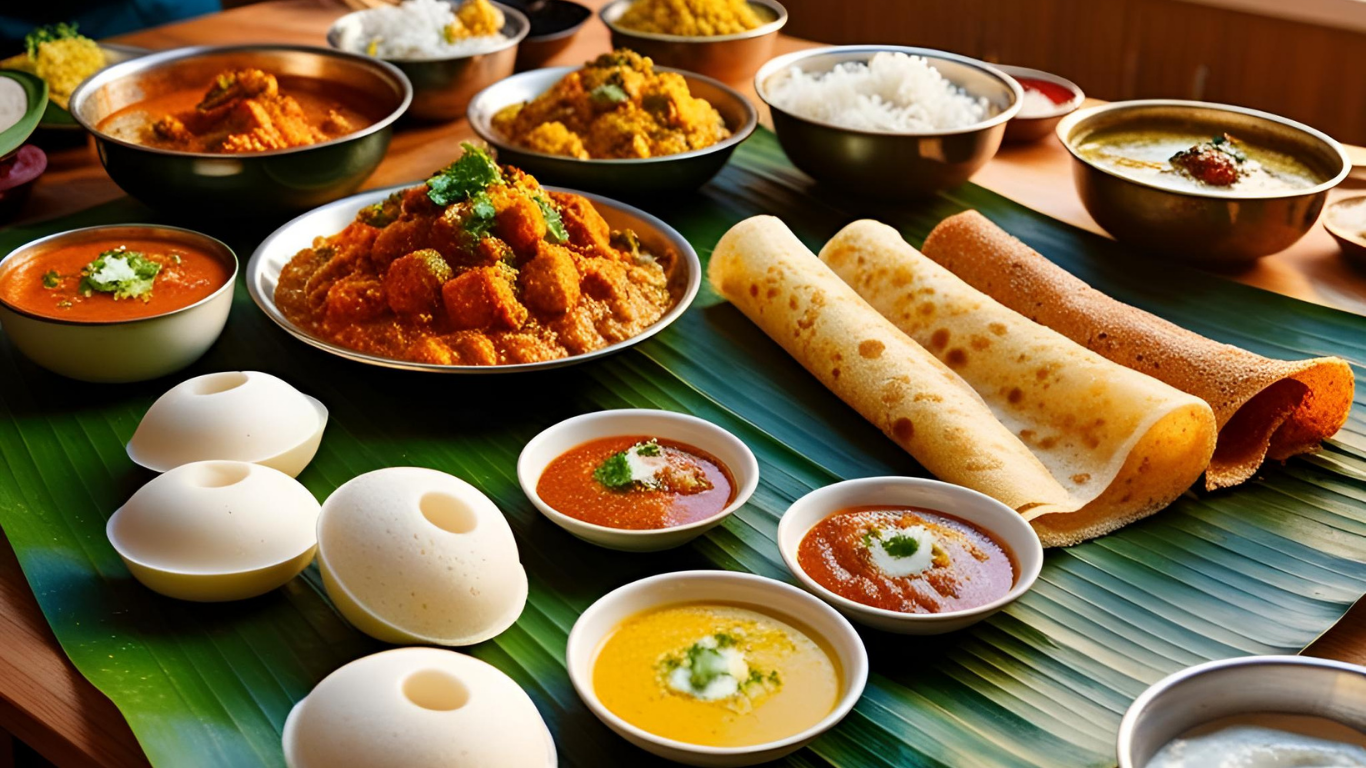
South Indian food is a magnificent illustration of regional Indian cuisine’s richness, complexity, and delectability. This cuisine, which comes from the five southern states of Andhra Pradesh, Telangana, Tamil Nadu, Kerala, and Karnataka, is renowned across the world for its distinctive use of rice and lentils, fermented dishes, and spices. South Indian cuisine relies heavily on plant-based ingredients and traditional cooking techniques to produce tasty and healthful dishes.
Every region of South India contributes something unique to the table, from the subtle, cozy sambars of Karnataka to the spicy biryanis of Andhra, the coconut-laced stews of Kerala, and the crisp dosas of Tamil Nadu. Respect for ancient recipes, locally produced spices, and a well-rounded nutritional philosophy are what bind them all together. Let’s examine the history, ingredients, cooking techniques, and classic dishes of South Indian cuisine to discover its richness and beauty.
A Rich Tradition-Based Culinary Heritage
South Indian food has roots that go back thousands of years. Ancient Dravidian culture, local kingdoms, temple customs, and coastal trade routes all had an impact on the development of the food, which evolved as both a form of art and sustenance. It changed over time to take into account climatic requirements, Ayurvedic health principles, and religious customs. Idli and dosa, for example, are fermented meals that were created for their flavor as well as to help with digestion and keep food fresh in hot, muggy conditions.
Food was not just a source of nourishment but also a ritual in temple towns such as Madurai, Kanchipuram, and Udupi. In order to promote balance and sustainability, meals were prepared according to stringent hygienic and spiritual guidelines, which are still evident in the manner they are presented on banana leaves or in metal thalis today.
Essential Components that Characterize the Cuisine
A few basic components that are employed differently in each state are at the core of South Indian food. Lentils (dal) add texture and protein, while rice (steamed, pounded, fermented, or puffed) serves as the base. Particularly in Kerala and coastal Karnataka, coconut provides depth when it is consumed as oil, milk, or grated pulp. The main ingredients of most tempering (tadka) methods are tamarind, mustard seeds, curry leaves, red chilies, and asafoetida (hing).
Additionally important are spices like cloves, cinnamon, cardamom, and black pepper, which are frequently used to create homemade masala blends that are particular to each family. Fermented batters, which are used to produce idlis, dosas, uttapams, and appams, are important because they are versatile and improve intestinal health.
Breakfast Treats: A Nutritious Beginning
Breakfast in South India is legendary. Not only for its flavor, but also for its variety and nutritional depth. The morning table is dominated by fermented appams, spicy upma, fluffy uttapams, crispy dosas, and steamed idlis. Sambar, a tart lentil stew, and chutneys flavored with coconut, mint, tomato, or coriander are frequently served with these dishes.
South Indian breakfasts are meant to be energizing without being overly substantial. It is perfect for a steady flow of energy throughout the day because it contains complex carbohydrates, proteins, and fiber. For example, a masala dosa served with sambar and coconut chutney is not only tasty but also a full meal.
Main Courses That Are Both Nutritious and Enjoyable
A traditional lunch in South India is a lavish event. Rice, sambar, rasam, kootu (a vegetable-lentil dish), poriyal (stir-fried vegetables), curd, papad, and pickle are all served on banana leaves as part of a full meal in Tamil Nadu and Karnataka. This eating pattern encourages variety in flavors, quantity control, and digestion.
Main courses in Andhra Pradesh and Telangana are more spicy, using fiery podis (spice powders), gongura (sorrel leaf), and tamarind pulusu. Red rice, avial (vegetable-coconut medley), thoran (dry vegetables), olan, pachadi, and payasam for dessert are all staples of Keralan lunches, particularly the Sadya (traditional vegetarian feast).
The concepts—balance, diversity, and nutrition—remain the same despite regional differences. From the probiotics in curd to the fiber in veggies and spices for digestion, every component on the plate has a function.
Rasam and Sambar’s Iconic
Sambar and rasam are two dishes that are common in the southern states. Made with veggies, tamarind, and sambar powder, sambar is a filling lentil stew that is frequently seasoned with curry leaves and mustard seeds. Geographically, it might be thick and acidic in Tamil Nadu, slightly sweet in Karnataka, and quite spicy in Andhra.
In contrast, rasam is a thin, soupy dish that is prepared with tomatoes, pepper, tamarind water, and spices. Rasam is a refreshing and antioxidant-rich dish that is frequently served as a digestive course. Families frequently have a different rasam recipe for each day of the week, such as pineapple, garlic, or lemon rasam.
Snack Culture: Addictive, Crunchy, and Crispy
Another well-known aspect of South India is its thriving snack culture. Snacks in this region are frequently deep-fried yet surprisingly well-balanced in terms of ingredients, ranging from the spicy banana chips and ethakka appam (banana fritters) of Kerala to the irresistible murukku and thattais of Tamil Nadu.
Maddur vada, nippattu, and kodubale are found in Karnataka, whereas crispy chakralu and chekkalu are found in Andhra. These snacks are frequently made during festivals, but they can also be eaten as travel munchies or as a teatime companion. They are gluten-free and high in protein substitutes for Western fast food because they are prepared with rice flour, lentils, or chickpea flour.
The Southern Tradition of Biryani
South Indian biryanis hold a special place in culinary history, despite the fact that they are frequently linked to the North. When prepared in the dum (slow-cooked) method, Hyderabadi biryani is flavorful, spicy, and rich. Malabar biryani, a moist, aromatic dish from Kerala, is made with short-grain rice, spices, fried onions, and ghee.
Karnataka’s Bhatkal biryani has a coastal twist, while Tamil Nadu’s Ambur and Dindigul biryani are well-known for their distinct characteristics. In order to create regional masterpieces that showcase local products and heritage, these biryanis frequently use yogurt-based marinades, mint, coriander, and indigenous spices.
The South’s Sweet Side
Without a sweet conclusion, no South Indian feast is complete. South Indian desserts celebrate decadence with a cultural twist, ranging from the rich ghee-laden sweets like Mysore Pak, Rava Kesari, and Kozhukkattai to the syrupy payasam variations (made of rice, lentils, or vermicelli).
Tamil Nadu provides Paal Payasam, which is frequently offered in temples, while Kerala gives Ada Pradhaman, a payasam made with coconut milk and jaggery. Both Andhra Pradesh’s Pootharekulu (paper-thin sweet sheets) and Karnataka’s Kesari Bath exhibit ingenuity and talent. The majority of sweets are made for festivals, but many are also comfort foods that may be enjoyed every day.
Ayurveda and Vegetarianism in Common Foods
South Indian cuisine is distinguished by its adherence to vegetarianism and Ayurvedic principles, particularly in Tamil Nadu and Karnataka. The idea of the six rasas (tastes)—sweet, salty, sour, bitter, pungent, and astringent—is the foundation of meals. Because of this, every meal is not only delicious but also complete.
Many homes still eat according to seasonal rhythms, adding root vegetables in the winter, bitter gourd in the summer, and greens in the monsoon. Ayurvedic cooking practices are also reflected in the use of boiling, steaming, and tempering techniques as opposed to deep-frying. Even spices are chosen for their therapeutic qualities: curry leaves for healthy skin and hair, cumin for digestion, and turmeric for immunity.
Combination and Worldwide Appeal
South Indian cuisine has gained popularity all over the world in recent years. The dish is continuously being reinvented without losing its origins, from dosa tacos in the US to idli burgers in India. Regional specialties including Kerala stew, Andhra pickles, Coorgi pig curry, and Chettinad chicken are now served in restaurants all over the world.
The fact that many South Indian cuisines are naturally vegan and gluten-free has also drawn attention to the global trend toward plant-based diets. Rice, coconut, lentils, and vegetables are the main elements of this cuisine, which is both strongly anchored in history and flexible enough to accommodate contemporary dietary preferences.
Festival Cuisine and Cultural Events
There is a particular cuisine for every South Indian celebration. The perfume of pongal, which is both sweet and delicious, fills houses during Pongal. The Sadya feast, which consists of more than 25 dishes, is served on banana leaves on Onam. Dishes like vishu kanji, mango pachadi, and pulihora are made during Ugadi and Vishu.
Religious rites and festivities both heavily rely on food. Temple offerings, or prasadam, include everything from sweet pongal and laddus to tamarind and curd rice. Cooking is frequently a spiritual activity that is done with reverence and prayers.
In conclusion, there is more than just food.
South Indian food is about history, balance, culture, and sustenance in addition to flavor. It provides a full experience, including filling but light breakfasts, substantial main courses, hot snacks, and cozy sweets. It is a cuisine that nourishes the body and the spirit, with roots in ancient customs and informed by contemporary nutrition.
South Indian cuisine has something to offer everyone, regardless of whether you’ve always loved dosas or are just an inquisitive foodie. One thing hasn’t changed despite its continued influence on palates around the world: the profound love, care, and knowledge that each meal contains.