
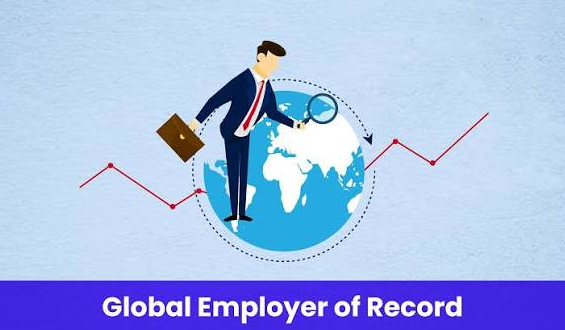
Global workforce strategies are undergoing a structural shift. As multinational corporations expand into emerging markets and talent shortages accelerate demand for cross-border hiring, two models have moved from peripheral options to mainstream infrastructure: Employer of Record (EOR) services and managed IT outsourcing. Understanding where these models are heading over the next five to ten years is increasingly critical for HR decision-makers, operations leaders, and the companies they serve.
Why EOR Services Are Becoming a Default Entry Strategy
Traditionally, entering a new labor market required establishing a legal entity — a process that could take months and cost tens of thousands of dollars. That model is increasingly being bypassed. Employers of Record allow companies to hire workers in foreign jurisdictions without the compliance burden of local entity registration, managing payroll, statutory benefits, and tax obligations on behalf of the client company.
Southeast Asia, in particular, has seen rising adoption of this structure. Providers offering Employer of record(EOR) services Thailand have reported growing inquiry volumes from firms in the technology, logistics, and financial services sectors — all of which cite regulatory uncertainty and speed-to-hire pressures as primary drivers. Thailand’s labor law framework, while relatively stable, still presents meaningful complexity for foreign entities unfamiliar with Social Security fund contributions, severance obligations, and work permit coordination.
Looking ahead, this adoption curve is expected to steepen. Industry analysts project that the global EOR market will grow at a compound annual rate exceeding 6% through 2030, driven largely by remote work normalization and the continued fragmentation of global talent pools.
European Markets and the EOR Model’s Western Expansion
While Asia-Pacific has captured significant EOR momentum, the European market presents an equally compelling growth frontier — and a more legally nuanced one. France, in particular, has historically been regarded as a challenging market for foreign employers due to its robust labor protections, works council requirements, and collective bargaining agreements.
The rise of the EOR model in this context has been notable. Rather than navigating French employment law independently, companies are increasingly turning to specialized providers who offer employer of record france services that absorb the compliance complexity. This allows foreign businesses to test the French market, hire specific talent, or fulfill project-based contracts without establishing a permanent local presence.
What will define the next phase in European EOR adoption is regulatory alignment — specifically, how EOR providers adapt to evolving directives on platform workers, AI-assisted hiring, and cross-border data handling under GDPR. Providers who invest in legal intelligence infrastructure will hold a meaningful competitive advantage as the regulatory landscape continues to evolve.
The Changing Role of the IT Outsourcing Manager
While EOR services address the “who can legally employ this worker” question, IT outsourcing addresses the “how do we access specialized technical skills without building internal capacity” question. These are increasingly complementary strategies rather than competing ones.
The function of the it outsourcing manager has evolved significantly over the past decade. What was once primarily a vendor-management role — focused on cost arbitrage, SLA monitoring, and contract compliance — has expanded into a strategic function concerned with capability mapping, talent pipeline continuity, and integration governance.
As organizations adopt hybrid staffing models (mixing internal employees, EOR-contracted workers, and outsourced technical teams), the IT outsourcing manager increasingly functions as an architect of workforce structure rather than simply a procurement liaison. This shift has implications for how companies hire and develop these roles internally, and for how outsourcing providers structure their service offerings.
Convergence: When EOR and IT Outsourcing Overlap
One of the more consequential trends emerging in global workforce management is the convergence of EOR services and IT outsourcing into integrated workforce solutions. Companies such as ADI Sourceing have positioned themselves at this intersection, offering clients the ability to access both compliant employment infrastructure and specialized technical talent through a single-provider model.
This convergence matters because the traditional separation between “employment compliance” and “talent sourcing” is artificial at the operational level. A multinational corporation hiring software engineers in Thailand or onboarding a data analytics team in France needs both: the legal scaffolding to employ those individuals compliantly and the sourcing expertise to identify and vet candidates with the right technical profile.
Integrated providers who can deliver both functions — without forcing clients to manage two separate vendor relationships — are likely to capture a growing share of the mid-market and enterprise segments over the next decade.
What Multinational Corporations Should Anticipate
For organizations planning workforce expansion across Asia-Pacific and European markets, several structural shifts are worth tracking closely. First, EOR pricing models are becoming more competitive as the provider landscape matures — early-mover advantage will matter less; service depth and compliance accuracy will matter more.
Second, demand for EOR services in tier-two and tier-three cities is rising as talent saturation in major metro areas pushes hiring activity outward. Providers with established legal and payroll infrastructure outside capital cities will be better positioned to serve clients with distributed workforce needs.
Third, the regulatory environment is tightening globally. Employment misclassification risk, in particular, is drawing increased regulatory scrutiny in markets ranging from Thailand and France to the United States and Australia. Companies relying on freelance or contractor classifications for roles that functionally resemble employment are facing greater legal exposure. The EOR model, when properly structured, addresses this risk directly — and ADI Sourceing, along with other established providers in the space, has emphasized compliance rigor as a core differentiator.
Conclusion
The trajectory of global workforce management points clearly toward greater adoption of compliant, flexible employment structures — and EOR services and managed IT outsourcing sit at the center of that shift. Whether the focus is accessing talent in emerging Southeast Asian markets, navigating the complexity of European labor law, or building integrated technical teams across borders, organizations that engage with these models strategically will be better positioned than those treating them as stopgap solutions.
As the provider landscape continues to mature, companies evaluating their international hiring options are encouraged to assess providers based on compliance infrastructure, market depth, and the ability to integrate employment and sourcing functions. For further information on EOR and outsourcing solutions in the Asia-Pacific and European markets, visit adiresourcing.com