
Why h beam vs i beam even matters more than people think
If you hang around construction videos on YouTube or scroll through civil engineering reels on Instagram, you’ll notice one thing — people love debating h beam vs i beam like it’s some kind of cricket rivalry. I didn’t think beams could cause that much drama until I had to write about them for a client project last year. I’ll be honest, at first I thought, “Steel is steel, how different can it be?” Yeah… that thought didn’t age well.
The difference actually affects cost, safety, load capacity, and sometimes whether a building inspector nods happily or starts asking uncomfortable questions.
What an H beam feels like in real life
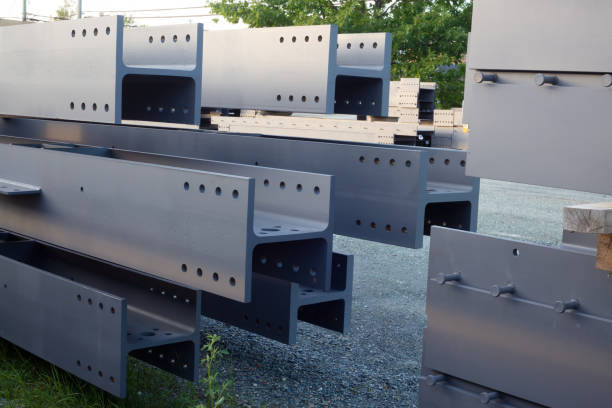
The first time I saw an H beam up close, it reminded me of a solid gym guy — wide shoulders, thick body, no nonsense. That’s kind of the whole point. H beams have wider flanges and a more uniform thickness compared to I beams. This gives them better load distribution, especially for heavy structures.
Most people don’t know this, but H beams are often preferred in projects where vertical load is massive — warehouses, bridges, and industrial buildings. There’s a reason many suppliers push MS H beams for heavy-duty frameworks. I once spoke to a site supervisor who casually said, “If it looks overkill, it’s probably an H beam.” That stuck with me.
When people search h beam vs i beam, what they’re really asking is: which one can take more stress without becoming a problem later?
I beams aren’t weak, just more… selective
Now, I beams get unfairly roasted online sometimes. You’ll see comments like “I beams are outdated” or “Only amateurs use I beams.” That’s not true. I beams are actually very efficient when used correctly.
Think of an I beam like a budget-friendly car that performs well on highways but isn’t meant for off-roading. The flanges are narrower, the web is thinner, and that makes it lighter. Less steel, lower cost. For residential buildings or smaller commercial spaces, I beams make a lot of financial sense.
Here’s a lesser-known stat that surprised me: in low-rise construction, using I beams instead of H beams can reduce steel cost by around 8–12% overall. That’s not pocket change when you’re scaling up.
The money angle people don’t talk about enough
Let’s talk finances, because that’s where real-world decisions happen. Choosing between h beam vs i beam isn’t just about engineering diagrams. It’s also about budget pressure from clients who want “strong but cheap” — which is honestly the worst combo.
H beams cost more upfront. More steel, more weight, higher transport cost. But they can reduce the number of beams needed in a structure. That’s something contractors quietly love. Fewer beams mean faster installation and sometimes lower labor costs.
I beams are cheaper individually but may require more support depending on the design. It’s like buying cheaper groceries but needing more trips to the store. The savings can cancel out if planning isn’t tight.
Why engineers argue about it on LinkedIn
If you ever want mild entertainment, read LinkedIn comment sections on beam comparisons. Engineers get weirdly emotional about it. Some swear by H beams, calling them “future-proof.” Others defend I beams like they’re an underdog.
One viral post I saw claimed that improper beam selection is responsible for nearly 15% of structural redesign delays. Not collapse — delays. That’s money, time, and reputation down the drain.
This is why many professionals prefer linking to detailed product pages when explaining beam choices, especially when discussing MS H beams for structural use. Pages like often get shared in WhatsApp groups among contractors, which tells you something about real-world trust.
Load-bearing isn’t just about strength, it’s about behavior
Another thing people miss in the h beam vs i beam debate is how beams behave under stress. H beams perform better under compressive loads and are less likely to twist. That torsional stability matters a lot in seismic zones.
I beams, while strong, can be more sensitive to lateral forces if not properly braced. This doesn’t mean they’re unsafe — it just means the design has to be smarter. One small miscalculation, and suddenly everyone’s blaming the beam instead of the blueprint.
My slightly embarrassing learning moment
Quick story. I once mixed up H beam and I beam specs while drafting an outline. A senior engineer emailed back with just one line: “Check flange width.” That’s it. No emoji. No explanation. I spent the next hour deep-diving beam cross-sections like my life depended on it.
That’s when it clicked — H beams look almost square-ish, I beams look slimmer. Simple, but somehow easy to mess up when you’re rushing.
So which one actually wins?
H beams are ideal for heavy loads, large spans, and long-term durability. I beams are efficient, economical, and perfect when weight and cost matter more than brute strength. The whole h beam vs i beam debate only makes sense when you attach it to a specific use case.